Article
How to Track Habits Without Becoming Obsessed with the App
Habit tracking is a tool, not a goal. Here's how to use it productively without letting the app take over the behavior you're trying to build.
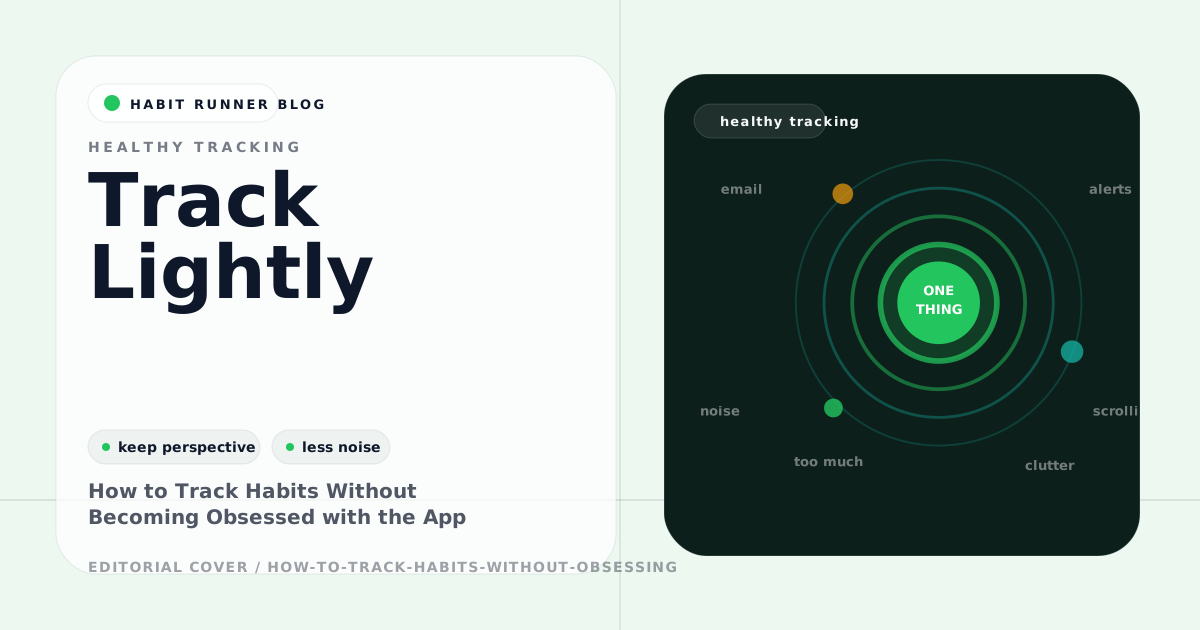
There's a version of habit tracking that helps you build better routines. There's another version where you spend more time managing the tracker than doing the actual habit.
The second version is more common than people admit.
Tracking is a means to an end. The moment the app becomes more important than the behavior, it has stopped serving you.
Signs Your Habit Tracking Has Gone Off Track
- You spend more time optimizing your habit list than completing habits
- Missing a log entry feels worse than missing the habit itself
- You've added ten habits and are actively working on two
- You feel anxious when you can't open the app to check in
- You've restarted the same habits four times this year
Any of these can happen with any productivity tool. They're not a sign that tracking doesn't work — they're a sign that the system needs adjustment.
Keep the Habit List Small
The instinct when setting up a habit tracker is to add everything you want to do. Drink more water. Exercise. Meditate. Read. Journal. Call family. Practice a language. Learn something new.
These are all valid. They don't all need to be tracked simultaneously.
A practical cap: track no more than five habits at once. If you have more things you want to build, write them down separately and add them when one of the five becomes automatic.
Habits that are already automatic don't need to be tracked. Tracking should be reserved for behaviors you're actively trying to establish.
Separate Tracking from Evaluation
Logging a habit should take seconds — not minutes. The act of tracking is just recording: yes or no, did you do it.
Evaluation — reviewing whether the habit is working, whether the frequency is right, whether to change it — happens separately, once a week.
If you find yourself doing both at once every day, the tracking session gets longer, more complicated, and more tempting to skip.
Log daily. Evaluate weekly. Keep them separate.
Set a Maximum Time for Daily Tracking
Give yourself a budget: habit tracking should take no more than two or three minutes per day. Open the app, tap what you completed, close it.
If daily tracking takes longer than that, your habit list is too long, your app requires too many steps, or you're doing something other than tracking (reviewing, adding, reorganizing).
A fast, offline habit tracker helps here because there's no loading screen to get lost in and no social feed to scroll. You open it, you tap, you close it.
Don't Track Habits That Are Already Automatic
Tracking a habit you've done every day for two years isn't adding value — it's just maintaining a number. At some point, the habit is wired. You can drop it from the tracker.
This also creates space to add something new when the time is right.
Treat Broken Streaks as Data, Not Failure
One of the biggest drivers of over-engagement with habit tracking is streak anxiety. The fear of losing a streak can make you hyper-focused on the app itself.
If a streak breaks, note it and move on. A broken streak is useful information: what happened? Was the habit too demanding? Did something interrupt your schedule? Is it worth adjusting the minimum?
Streaks are useful indicators of consistency. They're not a measure of your worth as a person.
Frequently Asked Questions
How often should I review my habit tracker?
Daily for logging (30 seconds to 2 minutes), weekly for evaluation (5 to 10 minutes). Monthly reviews are useful for bigger picture adjustments — removing habits that aren't working, adding new ones.
Is it bad to skip logging a habit you actually completed?
For the streak, yes. For the habit, no. The habit is more important than the log. If tracking feels burdensome, simplify it rather than forcing yourself to log every completion.
Should I delete a habit from my tracker if I stop caring about it?
Yes. A tracker full of habits you're not actively pursuing creates noise and guilt. Archiving or deleting stalled habits is healthy housekeeping, not quitting.
Habit Runner is designed to be fast and minimal — open, tap, close. It doesn't need your attention beyond the habits themselves. Try it free →
Ready to try one small change? Open Habit Runner