
Article
How to Recover After Breaking a Habit Streak
A broken streak doesn't mean you've failed. Here's a calm, practical approach to getting back on track after missing a habit — without losing momentum.
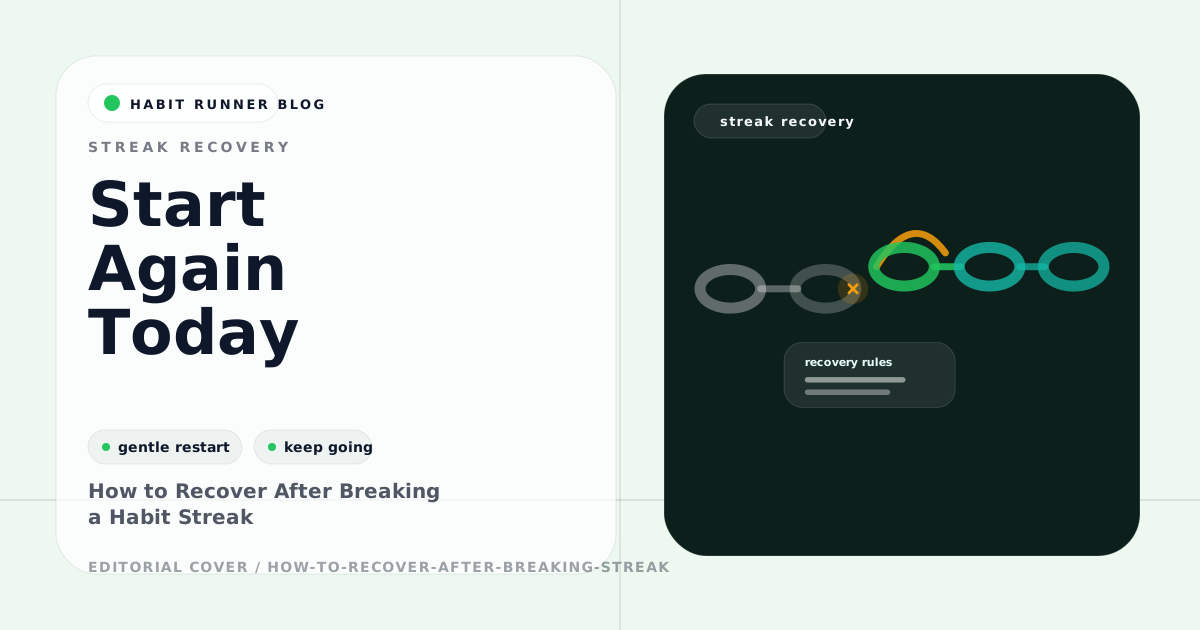
You had a 47-day reading streak. Then a chaotic week happened, and you missed three days.
That feeling is understandable. It's also misleading.
Forty-seven days of consistent reading happened. Those days don't disappear because the counter reset. The behavior was real. The cognitive habit of reading regularly was being wired. A gap of three days doesn't undo that.
The streak counter measures a specific thing: the length of the most recent uninterrupted run. It doesn't measure your total commitment, your long-term behavior, or your capability.
When you feel like you've lost everything after a miss, you're confusing the number with the work behind it.
The Same-Day Rule
The most effective recovery is immediate. If you notice the streak broke yesterday — complete the habit today.
Not tomorrow. Not "starting fresh next Monday." Today.
This isn't about the streak. It's about not letting one miss become two, and two become a month. The longer the gap between the miss and the return, the harder the return feels.
Do the minimum viable version of the habit. It counts.
Diagnose the Break Before Moving On
A streak break is useful information if you treat it that way.
Ask yourself:
- Was this a one-time interruption (travel, illness, emergency)?
- Was the habit poorly timed for my schedule?
- Was the habit too demanding to sustain?
- Did something change in my life that affects this routine?
A one-time interruption requires no adjustment — just restart. A pattern of breaks is a signal that the habit design needs to change: lower the minimum, change the trigger, reduce the frequency.
Restarting the same habit with the same design and expecting different results isn't optimism, it's repetition. Adjust the system first.
Use Freeze Days for Genuine Exceptions
If your habit tracker supports freeze days, use them proactively rather than reactively. If you know a stretch of days is going to be difficult — a trip, a big deadline, a family event — freeze the habit before the miss happens.
In Habit Runner, you can tap the snowflake icon on any habit to freeze it for that day. The streak continues without requiring a completion. Freeze days are designed for genuine exceptions, not regular use, but they're a practical tool for preserving streaks when circumstances are outside your control.
Reframe the Restart
Instead of seeing the restart as going back to zero, see it as evidence of resilience. You stopped. You noticed. You chose to return.
That's not failure. That's how long-term habits are actually built — through multiple cycles of consistency, interruption, and recovery.
People who maintain habits for years have all had streaks break. The distinguishing factor is whether they treated the break as a stop sign or a detour.
Don't Make Recovery Dramatic
Announcing a "fresh start," writing a reflection essay, reorganizing your entire habit list — these feel productive but often delay the actual behavior.
The recovery is simple: do the habit today. Review what happened once, briefly. Continue.
The less ceremony around the restart, the easier it is.
Frequently Asked Questions
Should I reset my streak counter or keep the old history?
Keep the history if your app supports it. A reset to zero is accurate for the streak count, but your completion history still shows the work. In Habit Runner, the analytics view shows your full completion history, not just the current streak.
Is it worth tracking a habit again after a long break?
Yes, if the habit still matters to you. The fact that it mattered enough to restart is already meaningful. A shorter new streak on a habit you care about is worth more than a long streak on a habit you've lost interest in.
How many freeze days should I use per month?
No firm rule, but if you're using freeze days more than once a week, it's usually a sign the habit needs to be redesigned rather than protected. Two to four freeze days in a month for a daily habit is reasonable in most circumstances.
Habit Runner shows your full streak history and gives you freeze days for genuine exceptions — so a single miss never has to mean starting over. Try it free →
Ready to try one small change? Open Habit Runner